
Panel 1 of 7
The Promise
In brief
This exhibit asks a big question: what did the promise of freedom in 1776 really mean, and who was included in it? We follow that question through one town, Islip, on Long Island.
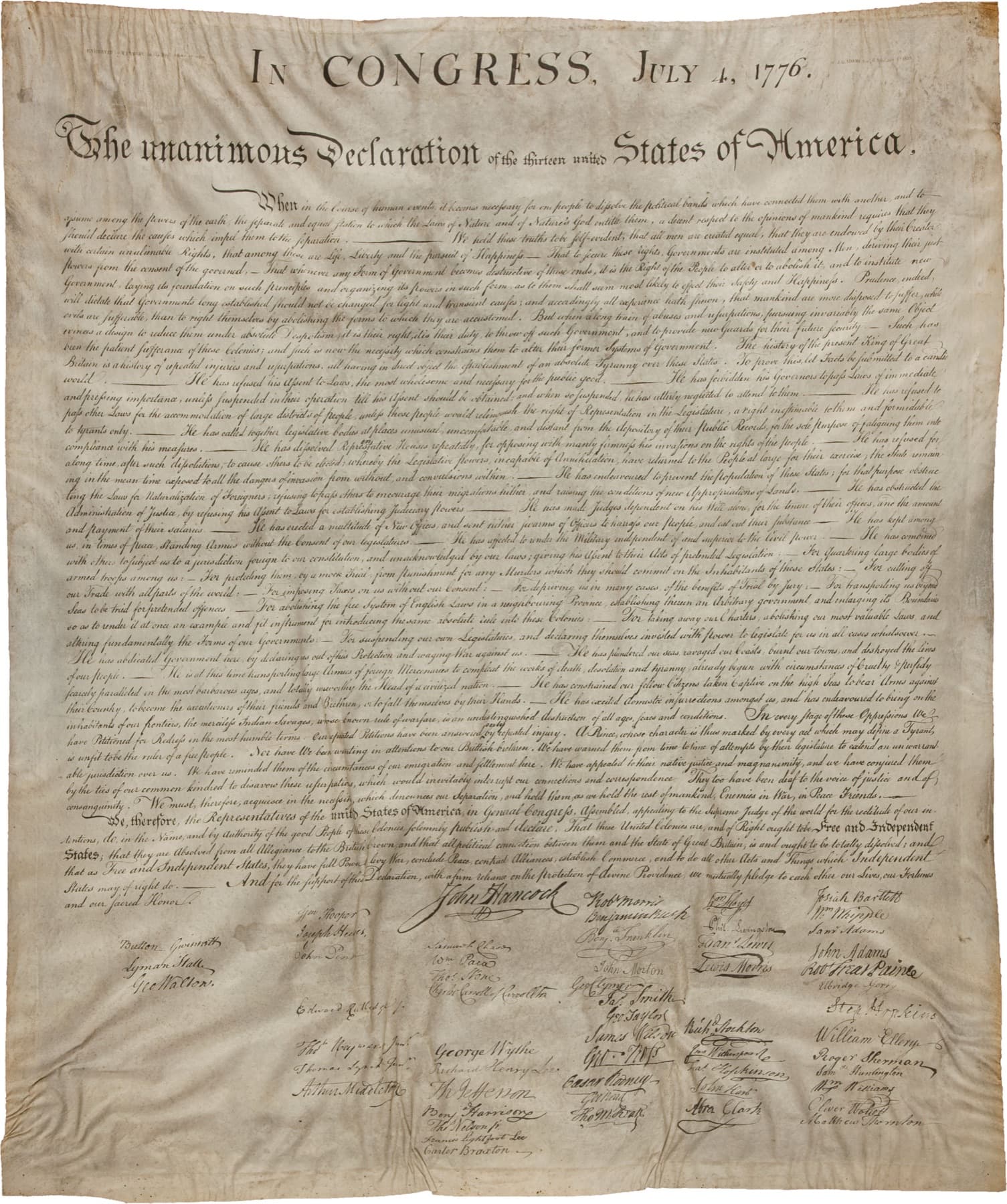
The 250th anniversary of American independence is not only a celebration of 1776. In New York, it is also an invitation to look honestly at the Revolution: what it promised, whom it included, and whom it left outside its ideals of liberty and freedom. The New York State 250th Commemoration Field Guide frames the anniversary around both New York's role in the Revolution and the continuing struggle of marginalized groups to reach those ideals.
This exhibit begins with that question and brings it to one Long Island town. In Islip, the promise of independence can be followed through land, law, occupation, family stories, town records, and the lives of people who kept making a home here after the war. The question is not only what independence meant in 1776, but what it has meant to each generation since.
The story is told as two pillars joined by one bridge. The first pillar is Revolutionary Islip: the land before the town, the creation of local government, the choice to sign the Articles of Association, the town's own militia company, six years of British occupation, Sagtikos Manor, and Washington's 1790 visit. The second pillar is the unfinished promise: the people who were excluded, the enslaved and indentured workers, and the communities that later widened who belongs in Islip.
Sources
- New York State 250th Commemoration Field Guide.